SIG Spotlight: Quality Improvement
More than 25 years ago, hospital medicine was born out of the now obvious-seeming conceit that medical care for hospitalized patients could be qualitatively improved.
So it’s no surprise that today one of the most popular SHM Special Interest Groups (SIGs) born of that movement focuses on quality improvement (QI)—the veritable raison d’être for the specialty.

Dr. Schleyer
“It’s really that commitment to continuous quality improvement and patient safety that puts it together,” said group chair Anneliese Schleyer, MD, MHA, SFHM, associate chief medical officer at the University of Washington School of Medicine and hospitalist at UW Medicine’s Harborview Medical Center in Seattle. “Having a shared passion and shared commitment to doing that has been an opportunity for us to build and strengthen a community under the SHM umbrella. Having the opportunity to learn from each other and share best practices has been incredibly valuable.“
SHM has 27 SIGs whose purpose is to “create communities of hospitalists around topics of interest, practice areas and/or care models.” The QI SIG is an important voice for the specialty and to members across the career spectrum.
“As our community has continued to grow, we have seen the value of learning from everyone. Whether it’s a hospitalist who may be starting on the journey in quality improvement, to those who have been doing it for many years. We always have the opportunity to learn from each other regardless of where we are,” Dr. Schleyer said. “During the pandemic, there was an opportunity to connect, which is one of the many valuable offerings that SHM has. And at that time, probably more than any other, the shared connectedness and shared approaches were really valuable.”
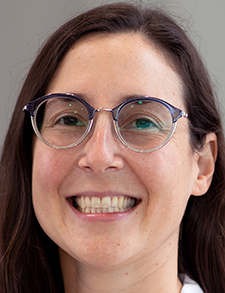
Dr. Baron
In the heart of the pandemic, SIG vice-chair Sarah Baron, director of inpatient quality improvement at the Albert Einstein College of Medicine’s Montefiore Medical Center in New York, saw scores of new members flock to the group.
In fact, according to SHM figures, the group saw increases in membership every month from June 2020 through January 2022, the latest data available. The group had 1,370 members in January, up from 224 in January 2018.
Members new and old come for community support, in addition to clinical pearls.
Sometimes, “it was less about sharing particulars,” Dr. Baron said. “That happened in other forums for many of us. It was significantly more about having a safe space outside the realm of the institution where we knew people and we were welcoming new people to participate about shared fears, shared experiences, in some ways shared backgrounds, and in other ways varied backgrounds. But we created this supportive environment in the middle of a time where we needed all of the support we could get.”
Dr. Baron is particularly proud of the idea that hospitalists feel empowered by the SIG to share concerns and issues that they might feel less comfortable sharing in other professional settings.
“We have all done projects, big or small, that have run up against administrative challenges,” she said. “And often, those challenges are best met and understood and deciphered by fresh eyes, by someone outside of your own institution. Those of us in this group call on each other constantly to examine our issues with a new perspective.
“And I do think a lot of the discussions we have are painted in broad terms. But every once in a while, we get down to teaching some very basic quality improvement tools. We like to post them on HMX (SHM’s members-only online community) afterward so they can do double duty and start some conversations. We are making changes within our group, which is the work that we do within our hospital, also. We are doing the QI that we are talking about to our group.”
Dr. Schleyer says keeping that momentum going post-COVID-19 is now key to adding even more value. That was part of the motivation for last year’s appearance by SHM CEO Eric Howell, MD, MHM, who was a quality expert himself before taking on the Society’s leadership post.
Another facet of engagement: monthly meetings of the SIG’s resources sub-group where anyone from residents to department heads can make presentations.
“We call them medical moments,” she said. “But we asked people who were interested in sharing projects that they were working on, no matter where they were in the project. Whether it was something they were just starting to think about, to get insights from others, or if it was something they were invested in and were working on for a long time…because you can always learn something from someone else, regardless of how much experience they have. That is something very magical to watch.”
Richard Quinn is a freelance writer in New Jersey.