Chapter Spotlight: Kansas
 All SHM chapters talk about getting early-career hospitalists more involved.
The Kansas chapter puts its money where its mouth is.
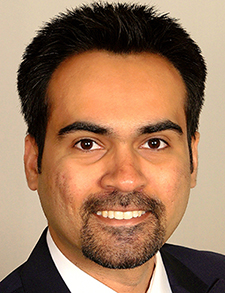
Dr. Rafiq
Its president, Ali Rafiq, MD, FACP, first got involved in the second half of 2020, just a year out of residency and just a year or so after the chapter itself launched. His medical director, Dr. Chady Sarraf, gauged his interest in becoming a chapter leader and, well, he didn’t say no.
“I didn’t really know what I was getting into,” said Dr. Rafiq, now a hospitalist with Sound Physicians at Ascension Via Christi St. Francis in Wichita, Kan. “The first year was kind of slow. I started off as secretary and director of academia. And COVID-19 was going on, as well, so we were all busy taking care of patients, which took up a lot of our time. But then the following year I took the position of president-elect and then president, and things started moving smoothly. Our immediate past president Dr. Alyssa Stephany ensured we kept the ball moving forward by setting up monthly virtual meetings.”
Smoothly is an understatement. Dr. Rafiq won the Most Engaged Chapter Leader Award for 2023—and the overall chapter won a Platinum Excellence award for 2023.
“I do hope that we are creating some kind of value for our members and the hospitalist community, in general,” Dr. Rafiq said. “It’s a rapidly evolving healthcare landscape, and hospitalists are really at the center of it. What we hope, from a chapter standpoint, is to provide that professional home that SHM aspires to be for hospitalists. To be the voice on the national stage that brings up issues from Kansas. And then, hopefully, work for the betterment of our patients, because that’s what it all comes down to.
“The recognition on a national stage is just the icing on the cake.”
Running a new chapter could be daunting, as processes have not yet been established, but Dr. Rafiq sees only opportunity.
“When you have a blank canvas, you can paint any way you want,” he said.
Dr. Rafiq says he pays a lot of attention to trying to serve Kansas hospitalists in all settings, be it rural institutions or academic centers in the state’s largest cities.
“We’re around just over 160 members here in the Kansas chapter,” he said. “Most of our members are based around the Kansas City metro center, understandably, because that’s the big urban center. The second largest member nest is around the Wichita area. And then we have a few members scattered around in the rural settings, as well. We have one member who is all the way out in western Kansas, in Garden City, Dr. Julie King, shout out to her!”
Dr. Rafiq says the chapter started an outreach program last year, which held three presentations, in Wichita and Hays.
“We’ll probably do that again this year, as well,” he said. “We’ll reach out to the members and see if we can physically come over there and talk to them—and talk to all the other hospitalists who are not members and show them the value of membership. We like to be the voice of all the hospitalists in the state, and hopefully, the hospitalists who are not members will see value in joining SHM just because of the education, networking opportunities, and professional development. I sound like a broken record, but there is power in numbers.”
That may never have been as apparent as during the most recent advocacy day for SHM, when he represented Kansas, along with other chapter leaders and members of SHM’s public policy committee, to lobby for hospitalists on Capitol Hill.
“When you go together as a group when you have representation from all over the nation, there is power in numbers,” Dr. Rafiq said. “Our voices are louder. That was a big plus of advocacy day. We did see the fruits come by, to a certain extent. We hope to continue doing that on a larger scale.
“Perhaps we need to organize a little bit more at the local level, with the local legislature. Like I said, the chapter is pretty young, so that is something we can aim toward moving forward, to have a more prominent voice in the local legislature, as well.”
Dr. Rafiq preaches the value of chapter membership for all hospitalists, whether they get involved early like him, or even if they’re getting ready to retire.
“When we started, we basically had just four leadership positions,” he said. “Now we have an advisory board for some of our more seasoned hospitalists. We have an advanced practice practitioner director, Kira Bruce, and an opening for a resident champion position (any resident going into hospital medicine can apply). The good thing about SHM is that it’s an umbrella for all kinds of people involved in hospital medicine. It really does serve as a professional home for hospitalists involved in the care of acutely ill patients.”
Richard Quinn is a freelance writer in New Jersey.